




Title: Solana and Ethereum: A Harmonious Coexistence in the Tokenization Race
In the fast-evolving world of blockchain technology, two platforms are frequently at the forefront of discussions regarding tokenization: Ethereum and Solana. Both ecosystems exhibit unique advantages and challenges, sparking debates on whether one will emerge dominant or if they can coexist as complementary forces in the expanding digital landscape. Dragonfly Capital, a leading venture capital firm focused on the cryptocurrency and blockchain space, emphasizes the potential for both networks to thrive alongside one another, each catering to different aspects of the burgeoning tokenization market.
The Case for Ethereum: A Mature Ecosystem
Ethereum, launched in 2015, has become the gold standard for decentralized applications (dApps) and smart contracts. It boasts the largest developer community and the most diverse ecosystem of decentralized finance (DeFi) projects, non-fungible tokens (NFTs), and more. As the first blockchain to introduce smart contracts, Ethereum has pioneered innovation in tokenization, particularly with its ERC-20 and ERC-721 token standards, enabling the creation of fungible and non-fungible tokens, respectively.
Despite challenges such as high gas fees and network congestion—issues exacerbated by its popularity—the Ethereum network is undergoing significant upgrades. The shift toward Ethereum 2.0, which aims to improve scalability and reduce transaction costs through a transition from proof-of-work to proof-of-stake, is expected to solidify its position in the tokenization race. Furthermore, Ethereum’s robust security and established reputation in the market make it a preferred choice for many large-scale projects.
Enter Solana: Speed and Scalability
In contrast, Solana has emerged as a formidable competitor, known for its lightning-fast transaction speeds and ultra-low fees. Launched in 2020, Solana’s unique consensus mechanism, Proof of History (PoH), allows it to process thousands of transactions per second, making it an attractive platform for developers looking to build scalable applications.
For projects focused on performance and cost-effectiveness, Solana presents a compelling case. The platform has rapidly gained traction, especially in the NFT and DeFi spaces, attracting a host of developers and projects drawn by the promise of a more efficient ecosystem. Solana’s commitment to scalability without sacrificing decentralization offers a fresh alternative to Ethereum’s more established but often congested network.
Coexistence in the Tokenization Landscape
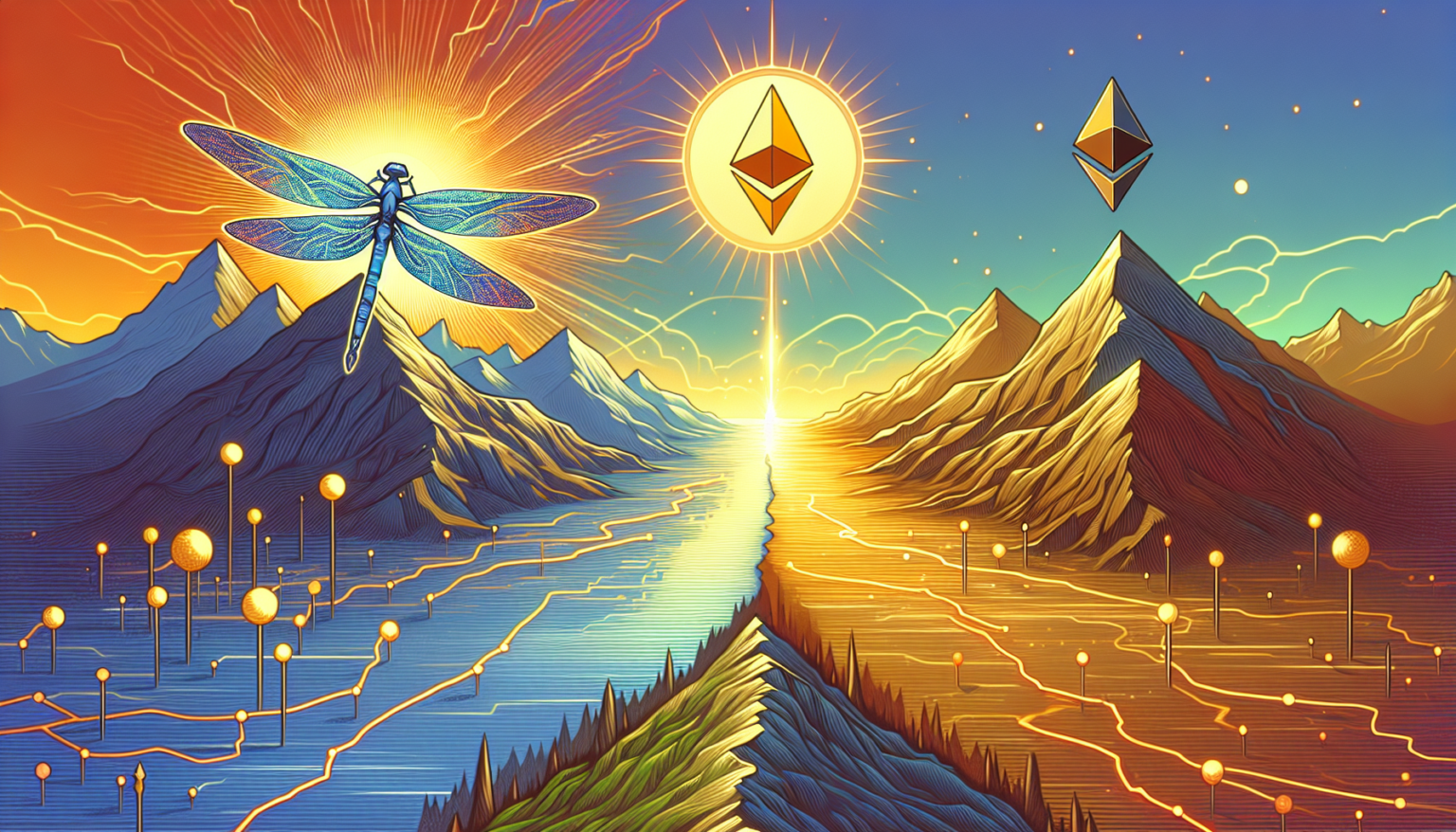
Contrary to the narrative that suggests a zero-sum game between Ethereum and Solana, Dragonfly Capital advocates for a perspective of coexistence. The two blockchains can serve different needs within the broader tokenization landscape. As the cryptocurrency market matures, it will likely require a diverse set of tools and technologies, with various blockchains catering to distinct audiences and use cases.
-
Diverse Use Cases: Ethereum’s mature ecosystem is well-suited for projects that prioritize security and decentralization. In contrast, Solana’s high throughput is perfect for applications that demand speed, such as high-frequency trading platforms or gaming applications where user experience is crucial.
-
Interoperability: The future of blockchain technology lies in interoperability. With developments in cross-chain solutions, assets and data can freely move between Ethereum and Solana, allowing projects to leverage the strengths of both platforms. This kind of integration can help creators optimize their projects for the best possible performance and reach.
-
Adoption of New Standards: As both networks continue to evolve, they will potentially adopt new token standards that can offer even more benefits, such as greater interoperability and user experience improvements. This ongoing innovation can invigorate the tokenization landscape, allowing unique properties and functionalities to emerge.
-
Community-Driven Development: Both Ethereum and Solana have vibrant communities that spur growth through innovation. As developers experiment with new technologies, frameworks, and tokenomics, the competition can catalyze rapid advancements in the industry, benefiting all stakeholders involved.
Conclusion
The tokenization race is not merely a contest of dominance; it represents an evolution of technology and finance that allows multiple players to thrive. Dragonfly Capital’s perspective on the coexistence of Solana and Ethereum underscores the potential for a diversified blockchain ecosystem where both networks contribute to the growth of the digital economy.
Ultimately, the future will not see one blockchain replacing another but rather an ecosystem where collaboration and competition coexist, creating a rich tapestry of innovation that can redefine how we perceive ownership, value, and exchange in the digital age.